Artist Research & Practice
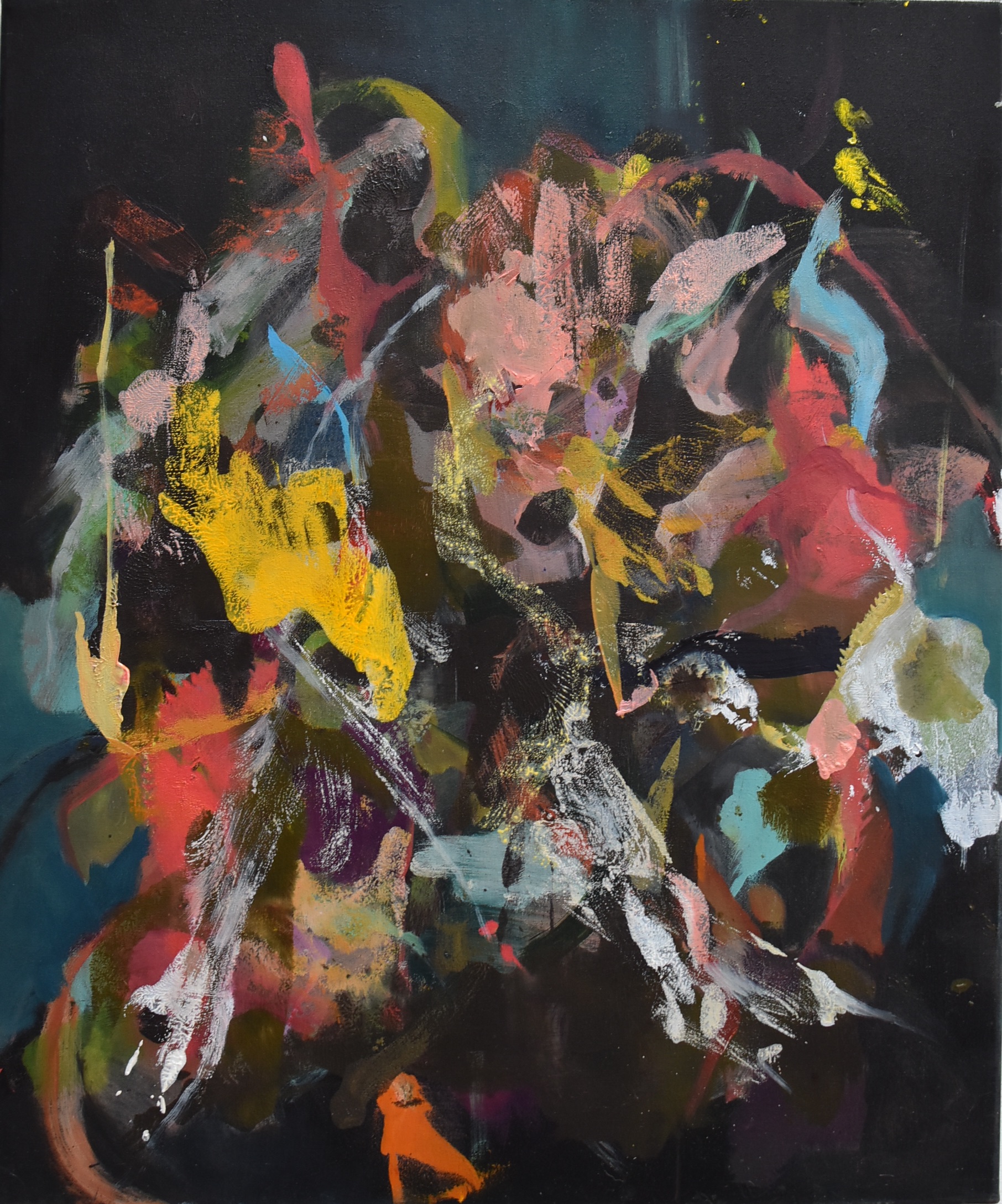
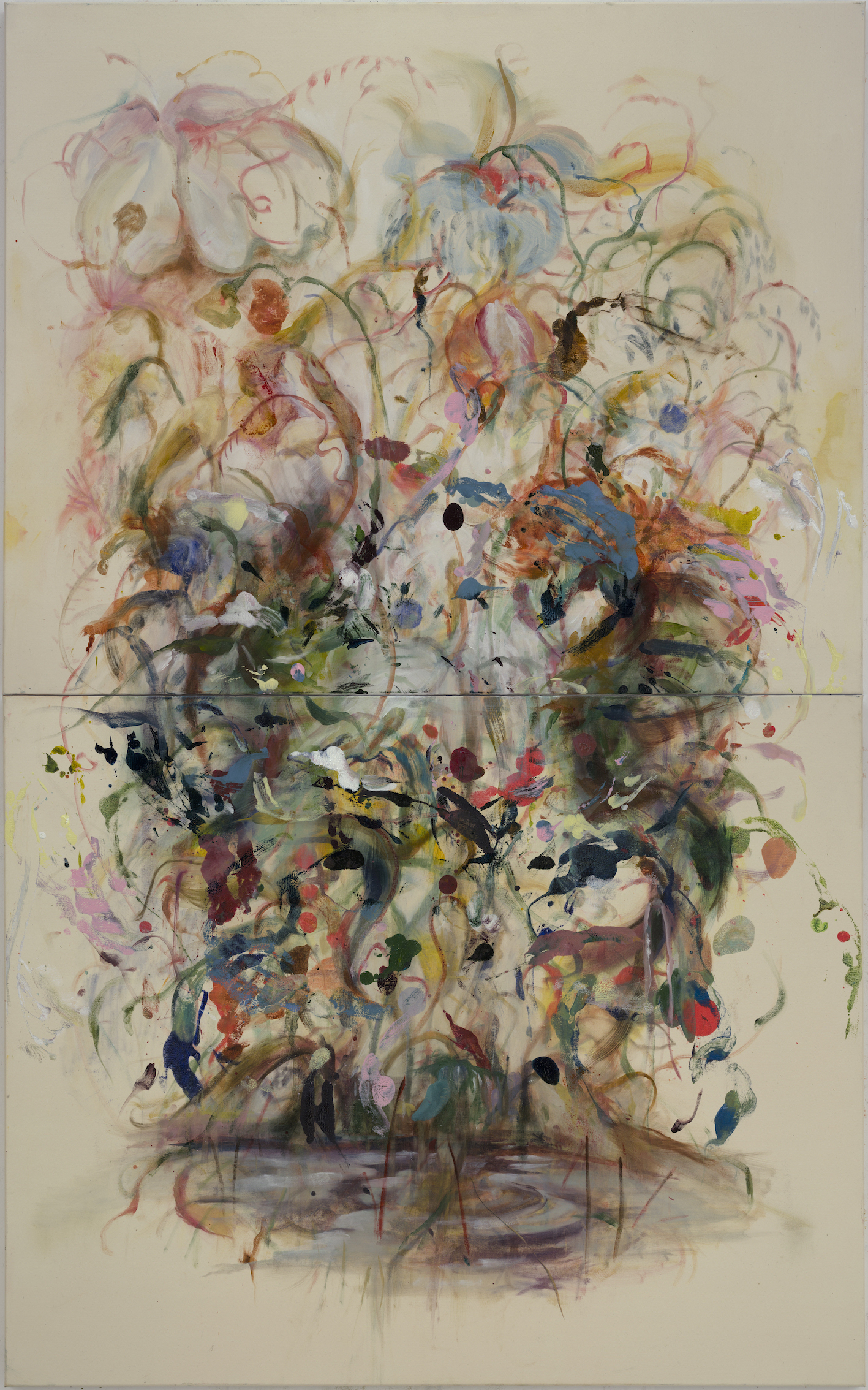
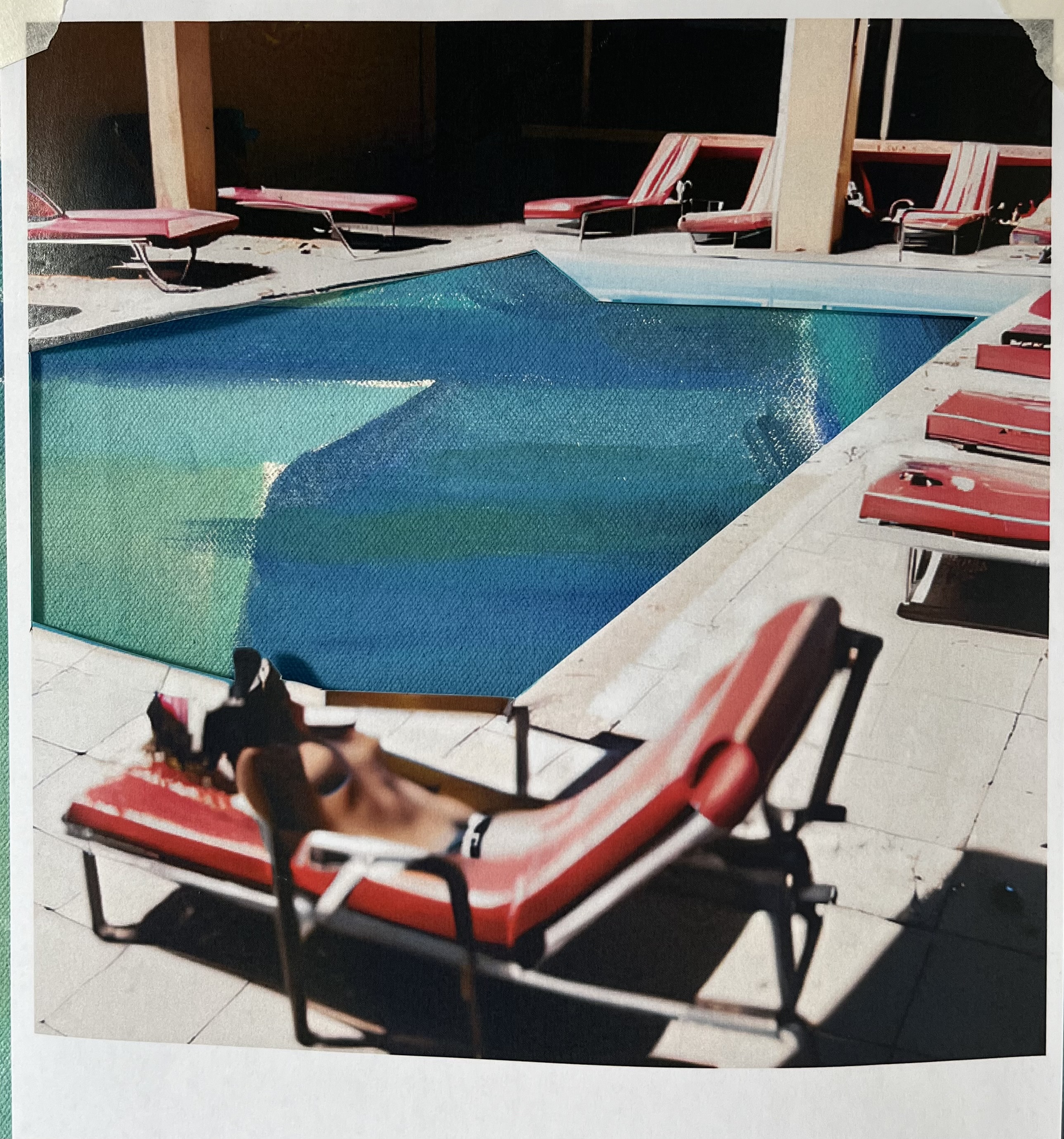
Painting, for me, exists as a subjective space — where the physical, the tactile, the actual, and the image collide and intermingle. It is a language that resists being flattened into pure simulation, polished signs, or seamless virtual imagery. Instead, it holds onto something messier, stranger, and more embodied. Referencing David Joselit’s observations in Painting 2.0: Expression in the Information Age (2015), the work considers how painting today exists within complex networks of images, distribution, information control, and economic forces — rather than standing apart from them.
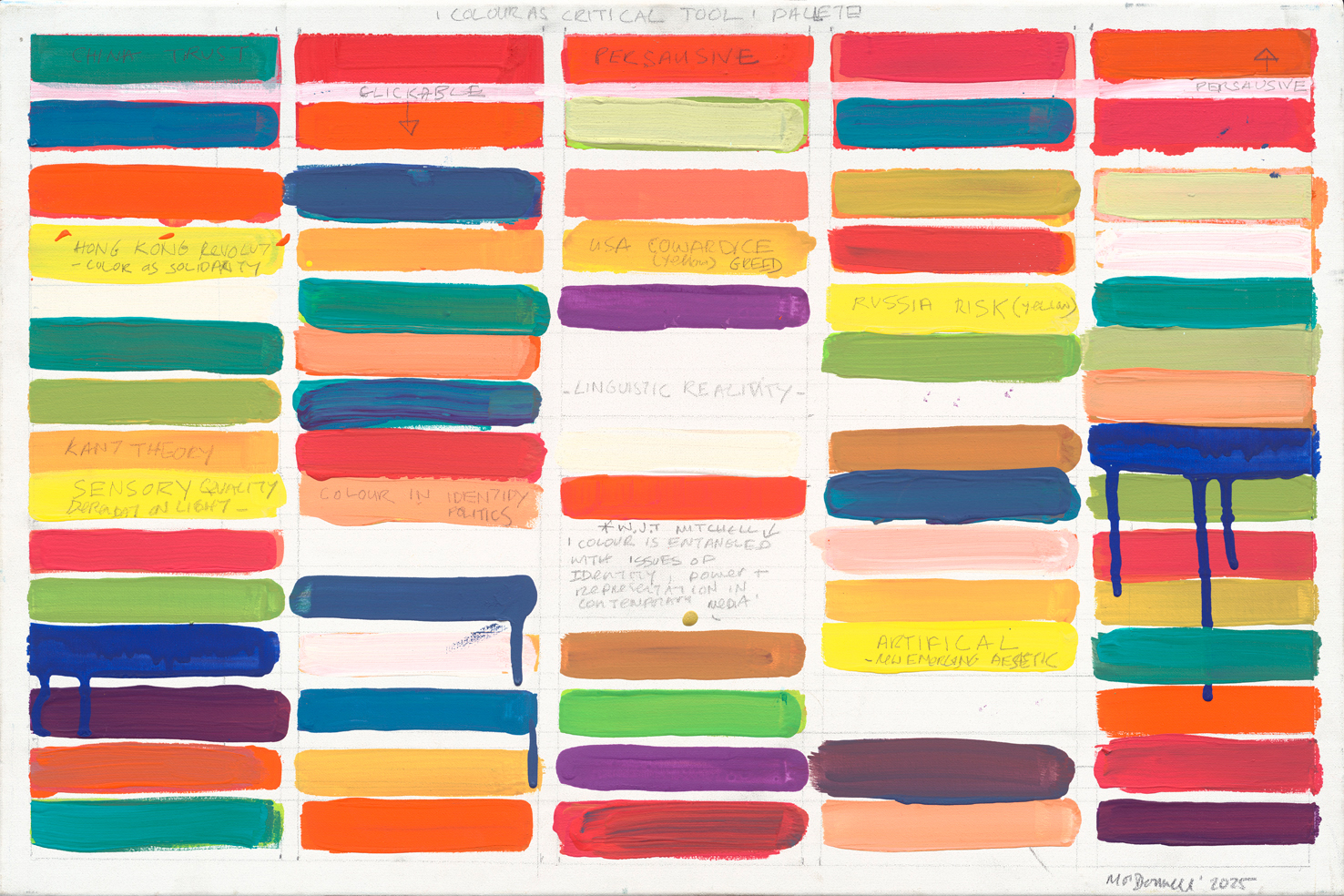
Through a self-devised De-Coding research framework (see below), a new painterly grammar has emerged: a playful yet probing, colour-coded language shaped by loosely taped or torn edges, ripped paper, unfinished surfaces, and references to analog archival and stationery syntax. Institutional palettes are disrupted by fluorescent hues, introducing both tension and subtle humour. This aesthetic evokes dislocation and resistance, reflecting the paradox of marginalised positions within systemic structures, as well as within the very technologies that shape contemporary life.
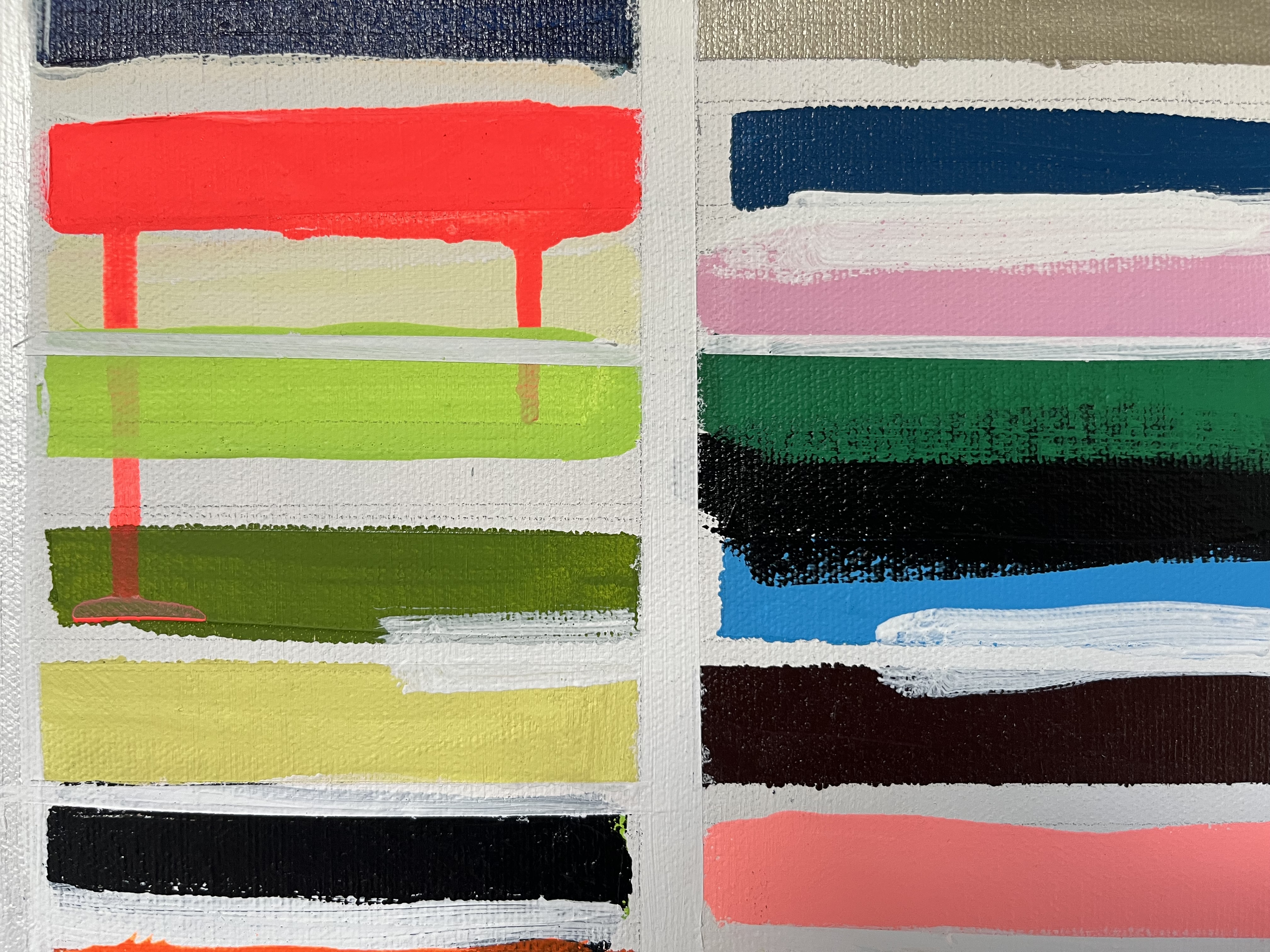
The works are grounded in rigorous, in-depth research into current political, social, and environmental conditions. Adopting a polymorphic approach to sourcing, they establish a framework that probes multiple layers of systemic analysis — from patriarchal structures and social media ecosystems to data infrastructures and beyond. These systems are critically examined through the lens of contemporary painting and its enduring capacity to inform meaning through the interplay of subject, form, and value.
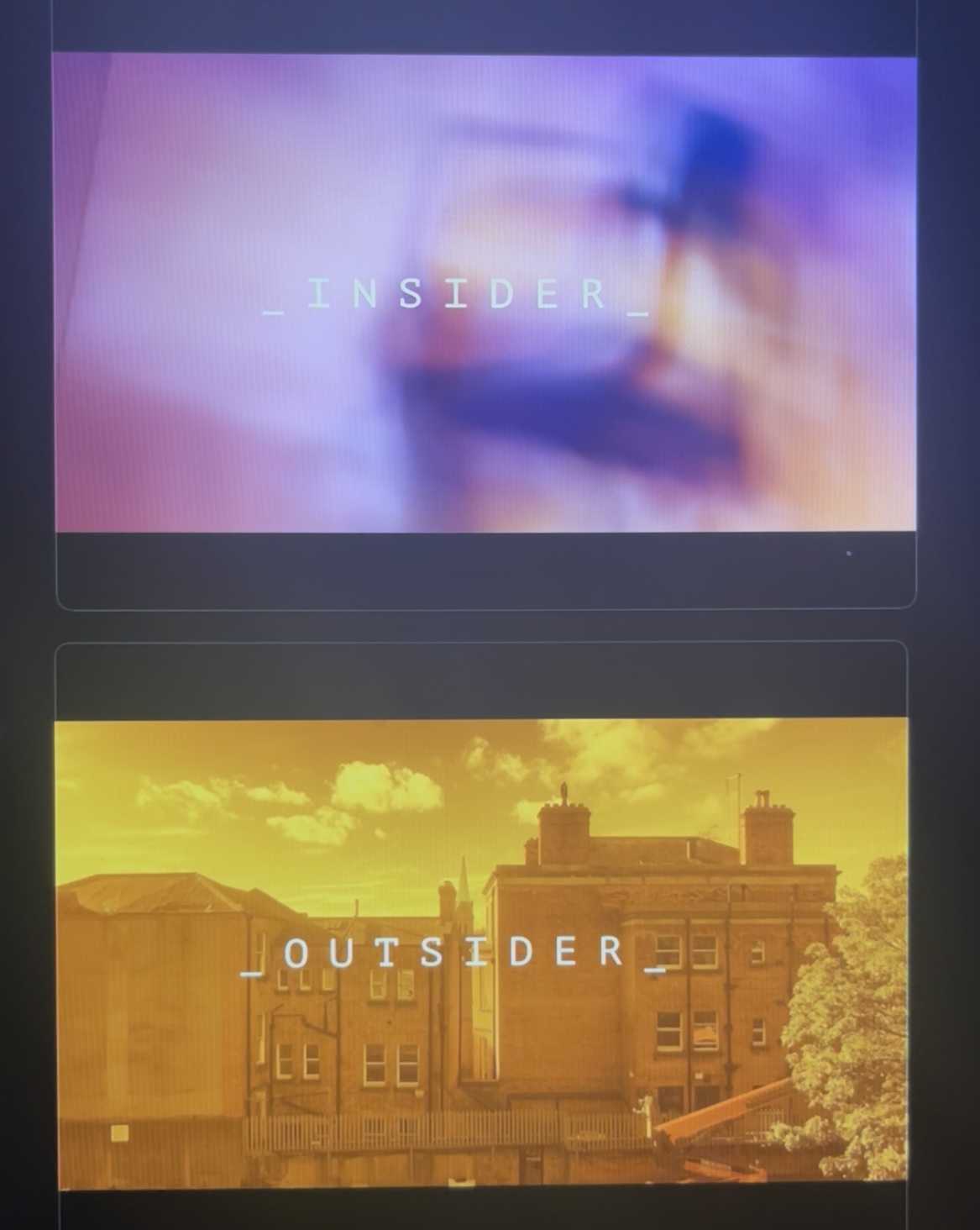
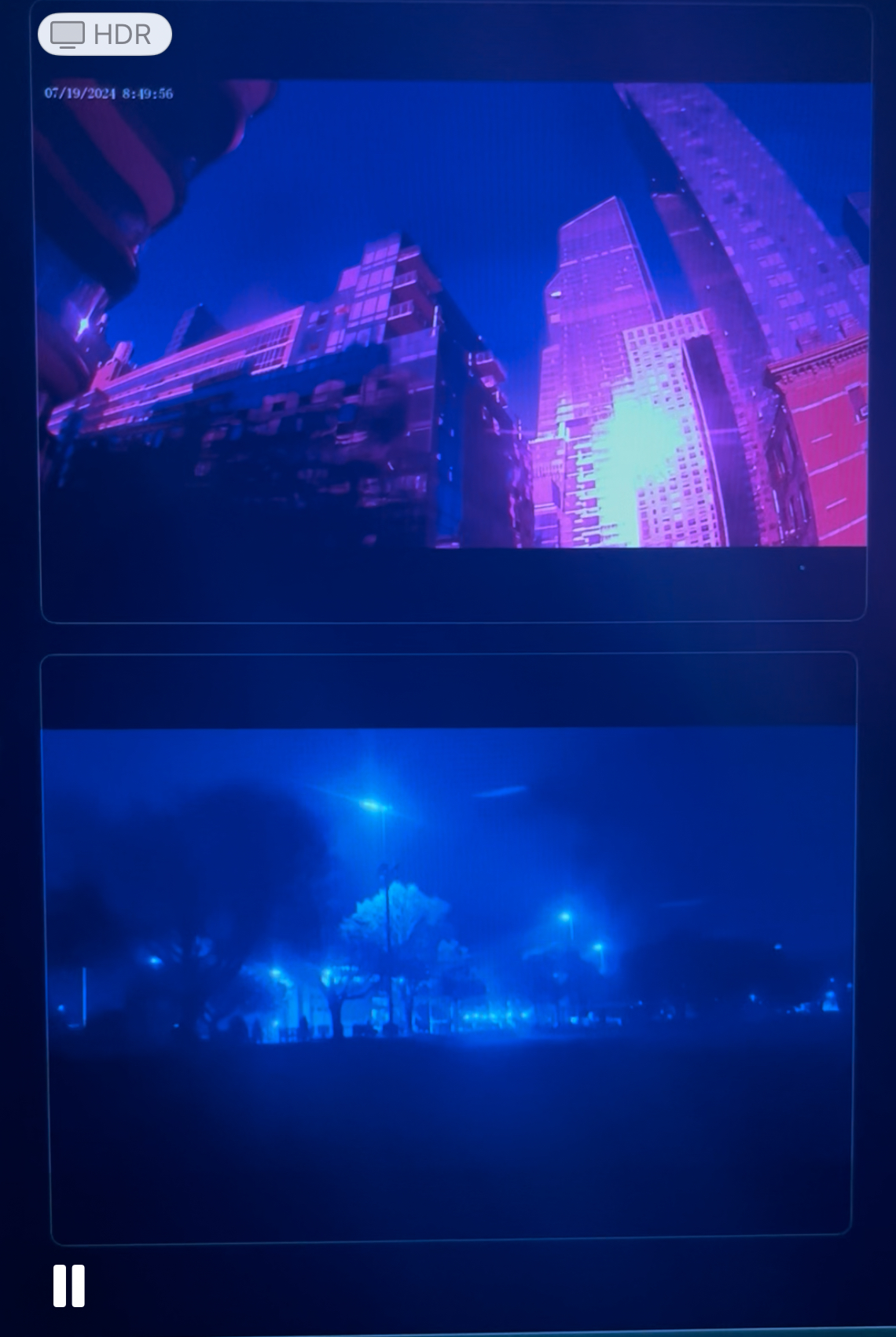
Video works evoke a retro, analog aesthetic, filmed through a lens of ‘otherness’ and passivity within the digital age. They operate as subtle reflections on colour-field painting while simultaneously existing as archival and future exhibition works that bear witness to contemporary conditions.
From this, a new modular system of painting has developed, referencing the tradition of colour field and avant garde painting to now, offer an updated subtle yet critical reflection on the role of painting today as a conduit for complex ideas that resonate with contemporary global unease. This evolving modular colour coded system allows for flexibility in scale and introduces the potential for commissioned works across architectural and public contexts, alongside an ambition for the work to operate within fluid public sites, realising large-scale public works.
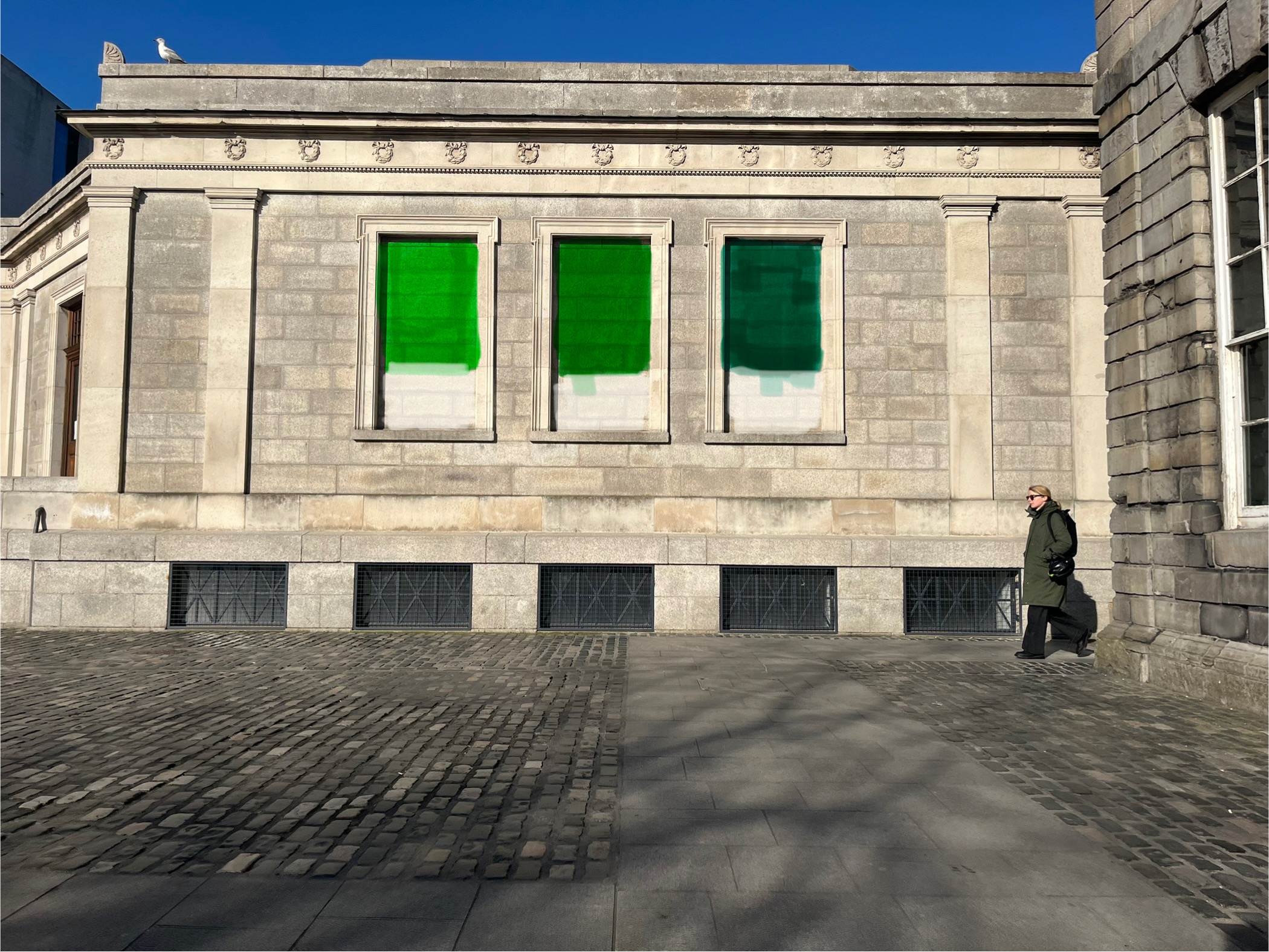
Extending along a trajectory of embedded artworks, this practice positions itself as socially aware, operating within gaps and at the edges. It offers a counter-narrative that invites public awareness, engagement, and interaction. My ambition is for the works to exist in a space of active audience participation and renewal — trying to stay physical, immediate, and alive, especially against the weight of simulation and spectacle.
Drawing, Video & Painting, as I see it, isn’t clean or consistent. It’s unstable, elastic, and full of unknown possibilities — a place where contradictions aren’t problems to fix, but materials to work with.
Decoding Framework
The De:Coding Framework started as a way to organize thoughts around research inquiries — an analyzing system — and over time it evolved into something more sustainable: an engine for continuous thinking. Ideas move from mind to wall — isolated, sorted, shuffled around, or replaced when new connections are made.
Built from neurodiverse strategies and practices referencing Cognitive Behavioural Therapy (CBT), the framework gathers diverse research, revealing unexpected overlaps and intersections.
The process stays open-ended on purpose, able to adapt to the speed and complexity of daily life. Ideas that don’t fit are archived as latent resources, often resurfacing when new alignments appear. When that happens, the framework pauses — allowing forms to take shape and be tested through painting, drawing, text, or moving image.
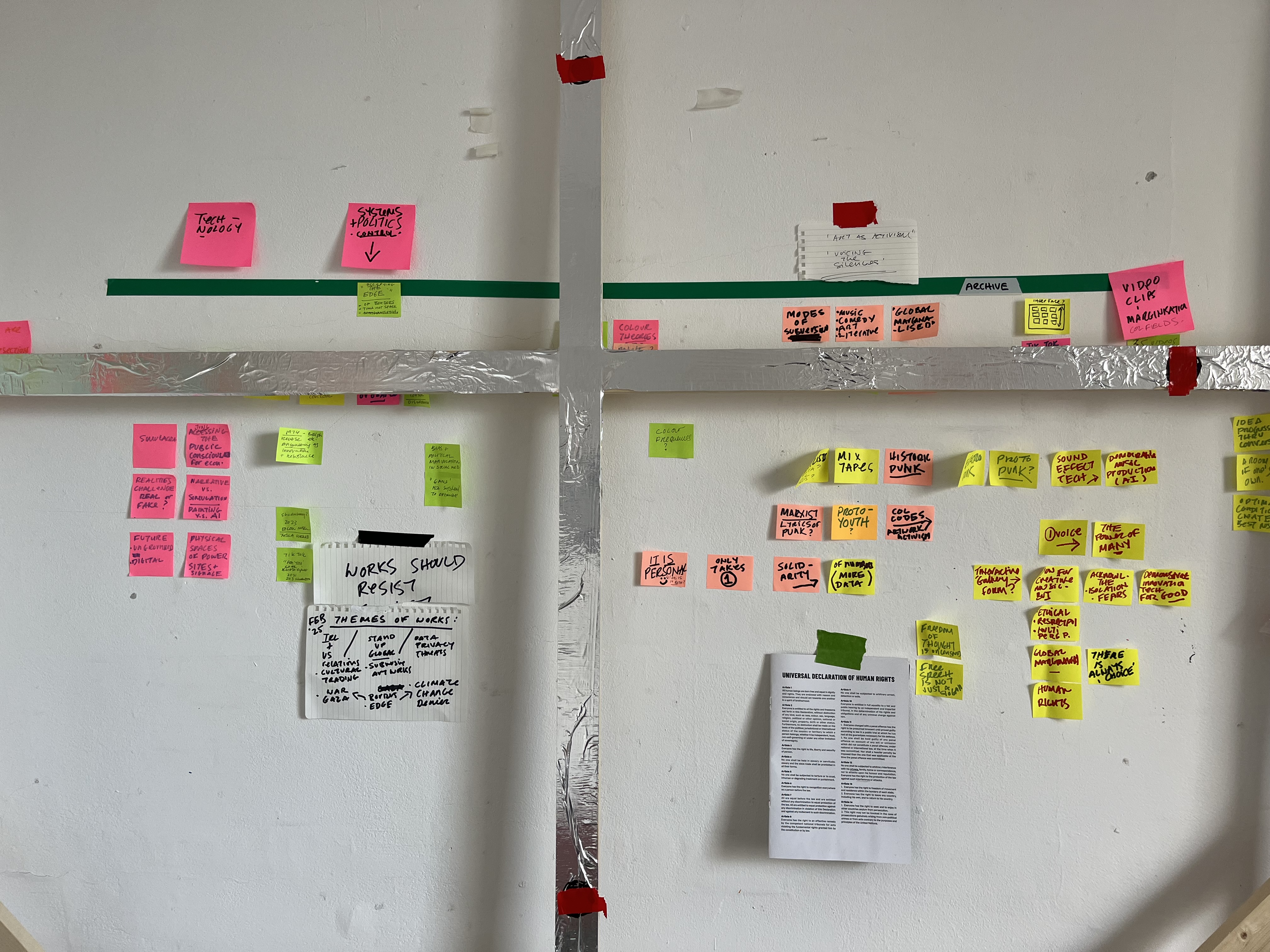
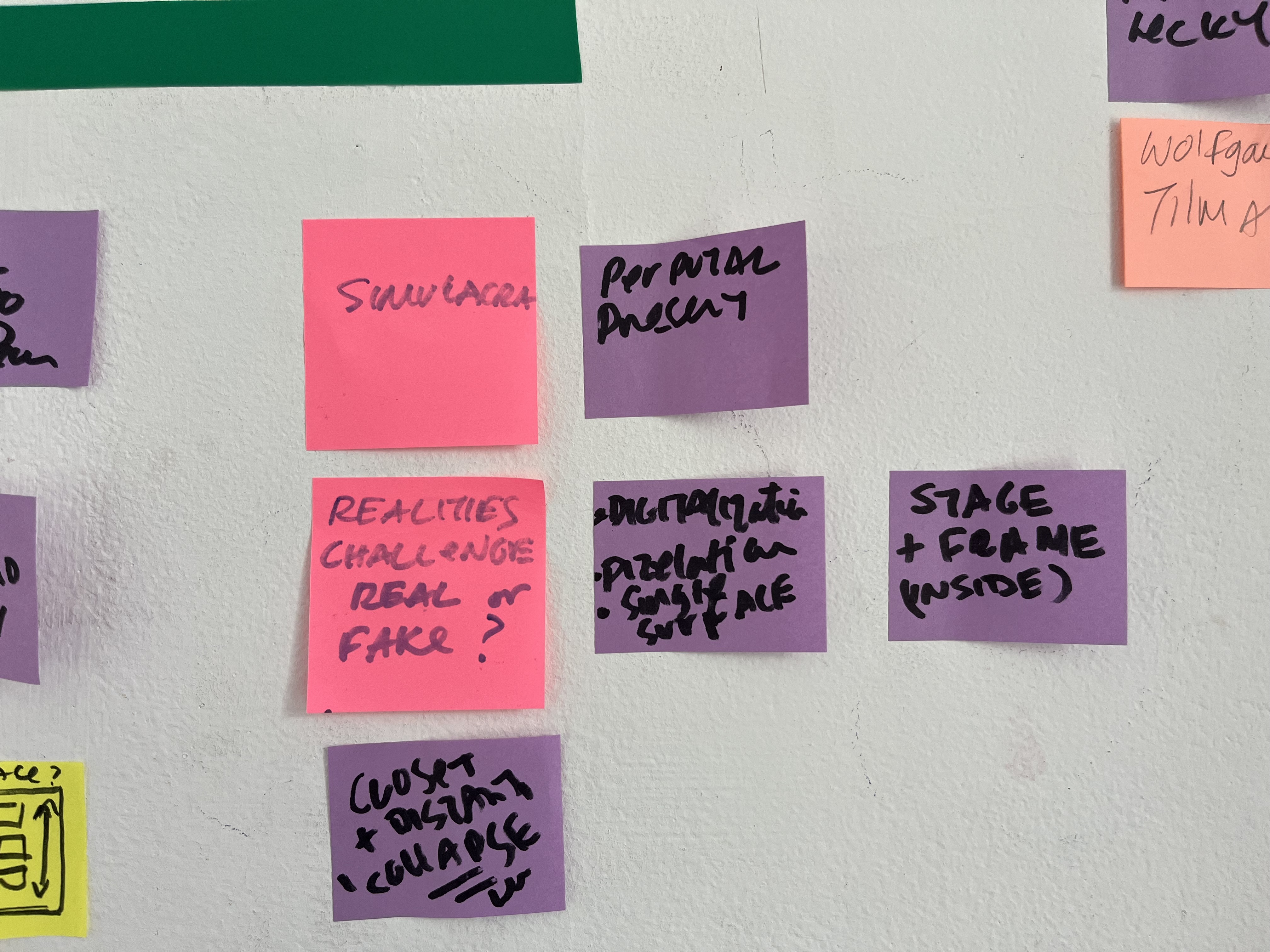
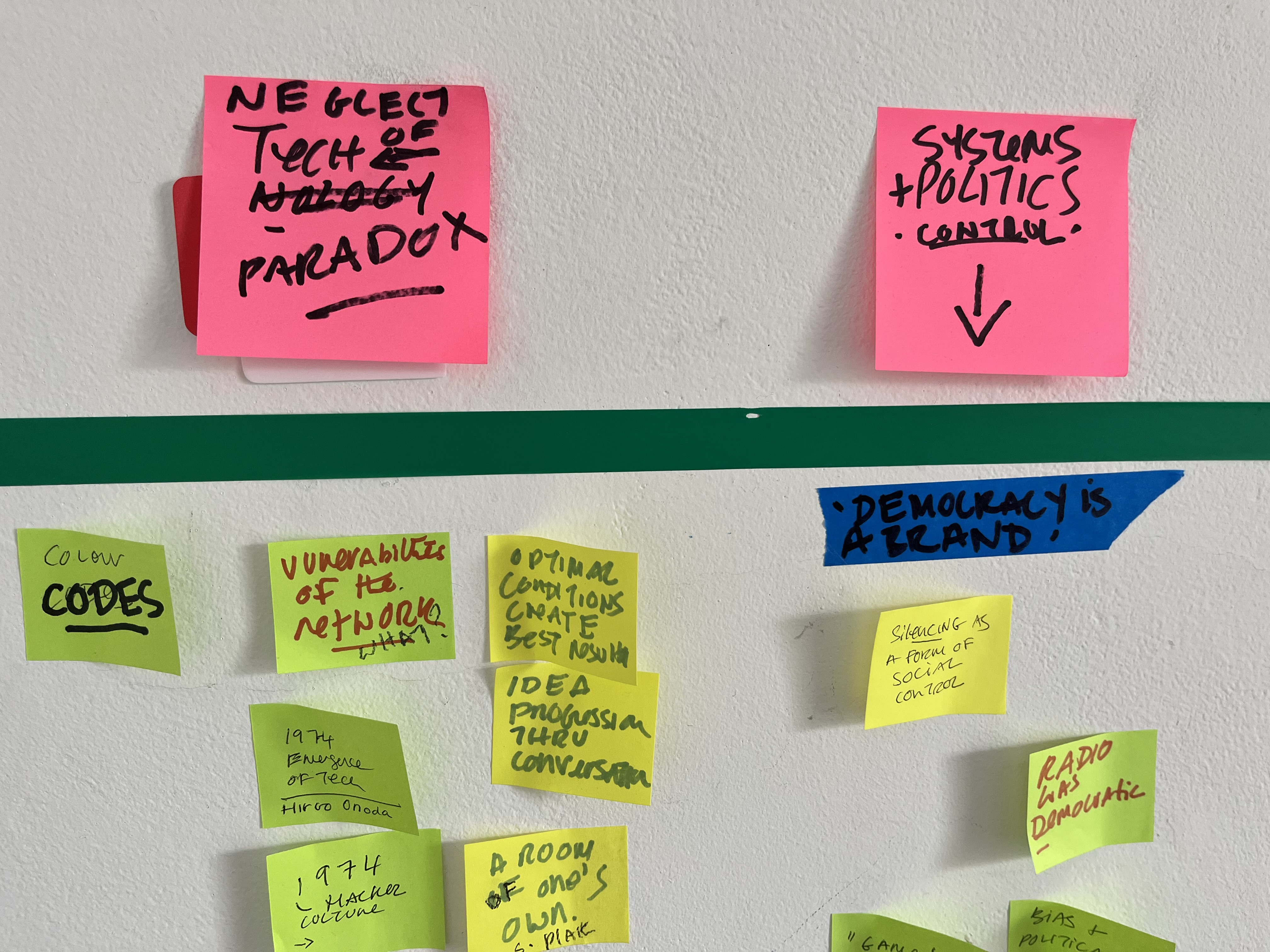
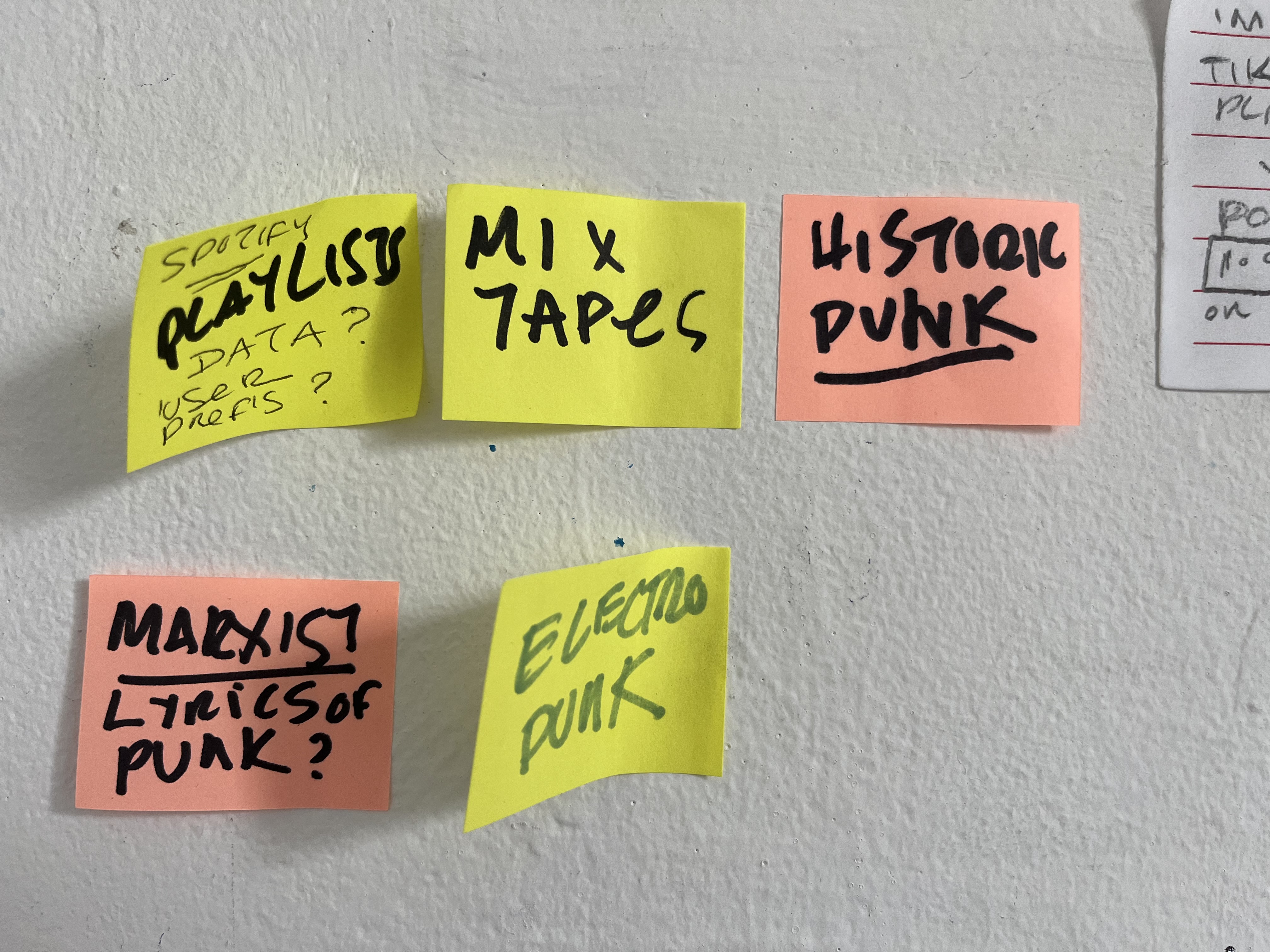
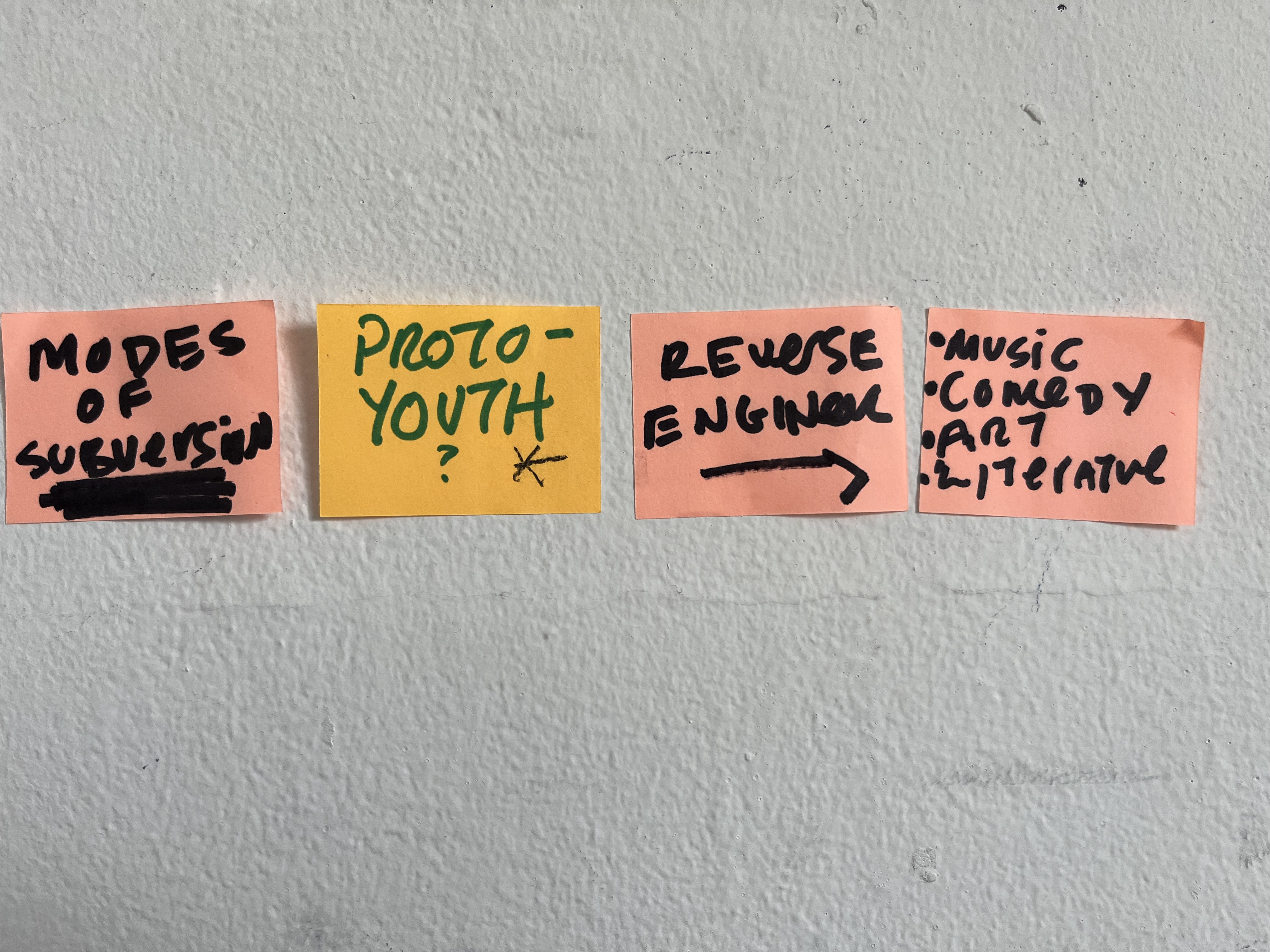
Influenced by Norbert Wiener's cybernetics models and CBT's cognitive tools, the system loops and gives feedback like a lo-fi analog version of the hi-fi, hyper-connected world it critiques — tracking rhythms of algorithms, political spectacle, and consumer culture’s seamless machinery. Even when the methods are simple, the circuits they respond to are anything but. John Berger’s Ways of Seeing also runs through this work: his insight that “the way we see things is affected by what we know or what we believe” feels more urgent than ever. Especially when so much of today’s infrastructure — fibre-optic networks, cloud servers, data farms — remains invisible, even as it structures how we move, think, and see. Painting, images, and moving image works here try to grapple with that invisibility — making visible the systems that operate just out of sight.
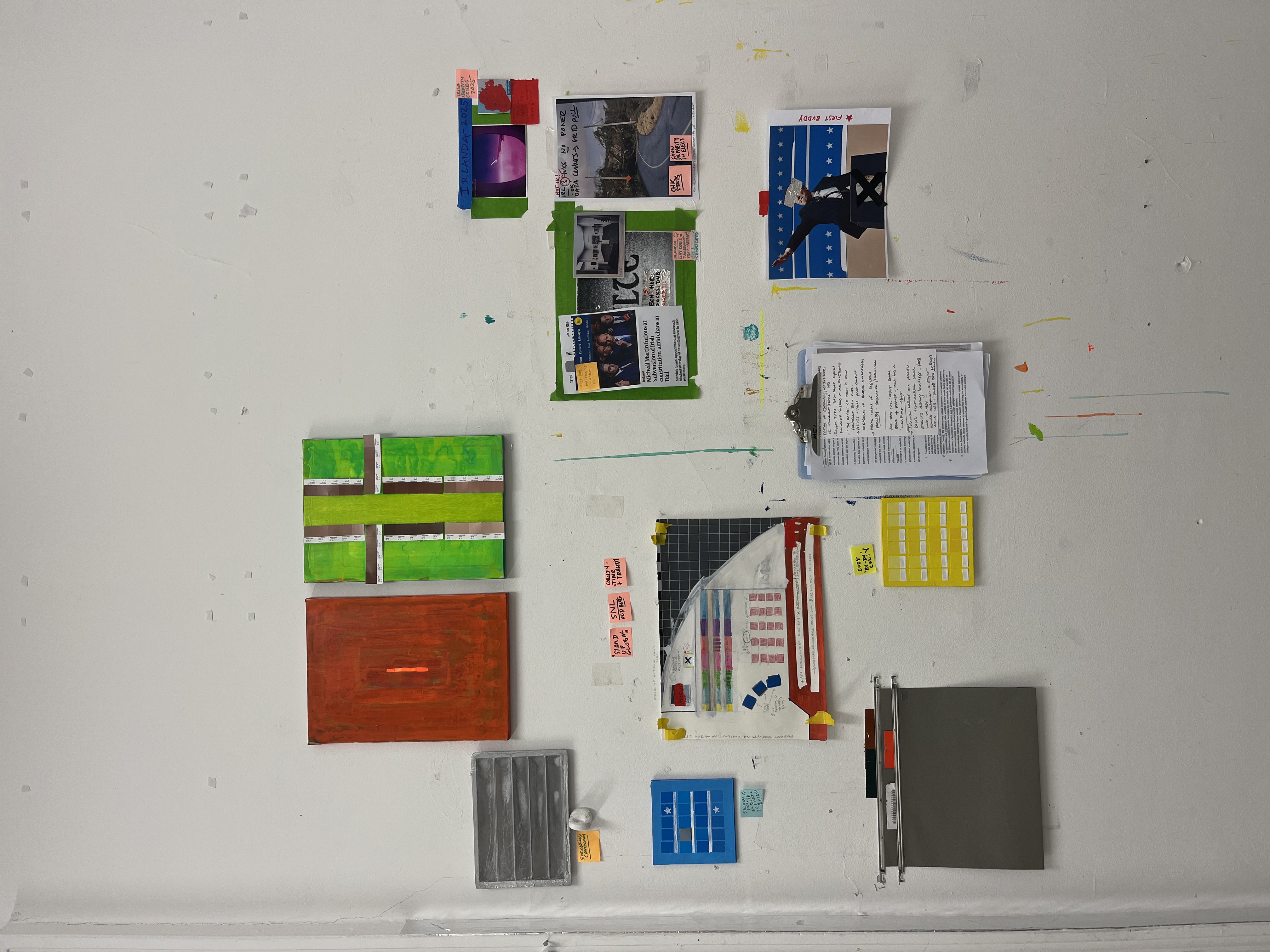
The De:Coding Framework remains the engine at the core: a method for staying open, responsive, and adaptable within environments shaped by invisible controls. The work aspires toward building new spaces where technology can be used creatively and thoughtfully — reimagining how we see, connect, and ultimately reflect on how we might build more just infrastructures and environments.
Research into emissive light, screen-based vision, and media saturation intensifies the use of colour across the works. Moving image pieces explore how colour isn’t neutral, but shaped by cultural context and language — tapping into a lineage of avant-garde and postmodern colour field strategies, where coding and abstraction resist Censorship.