Modular Painting
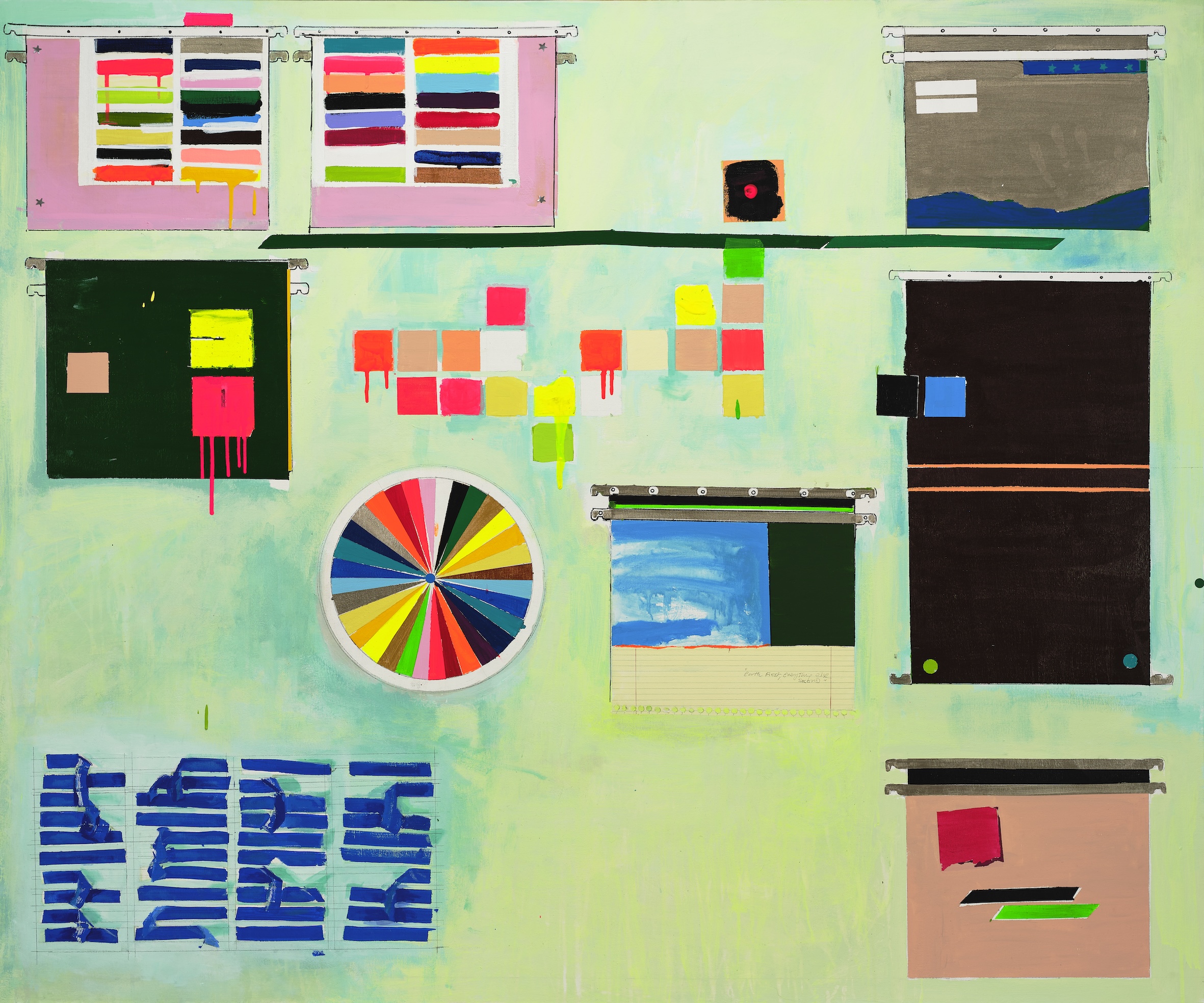
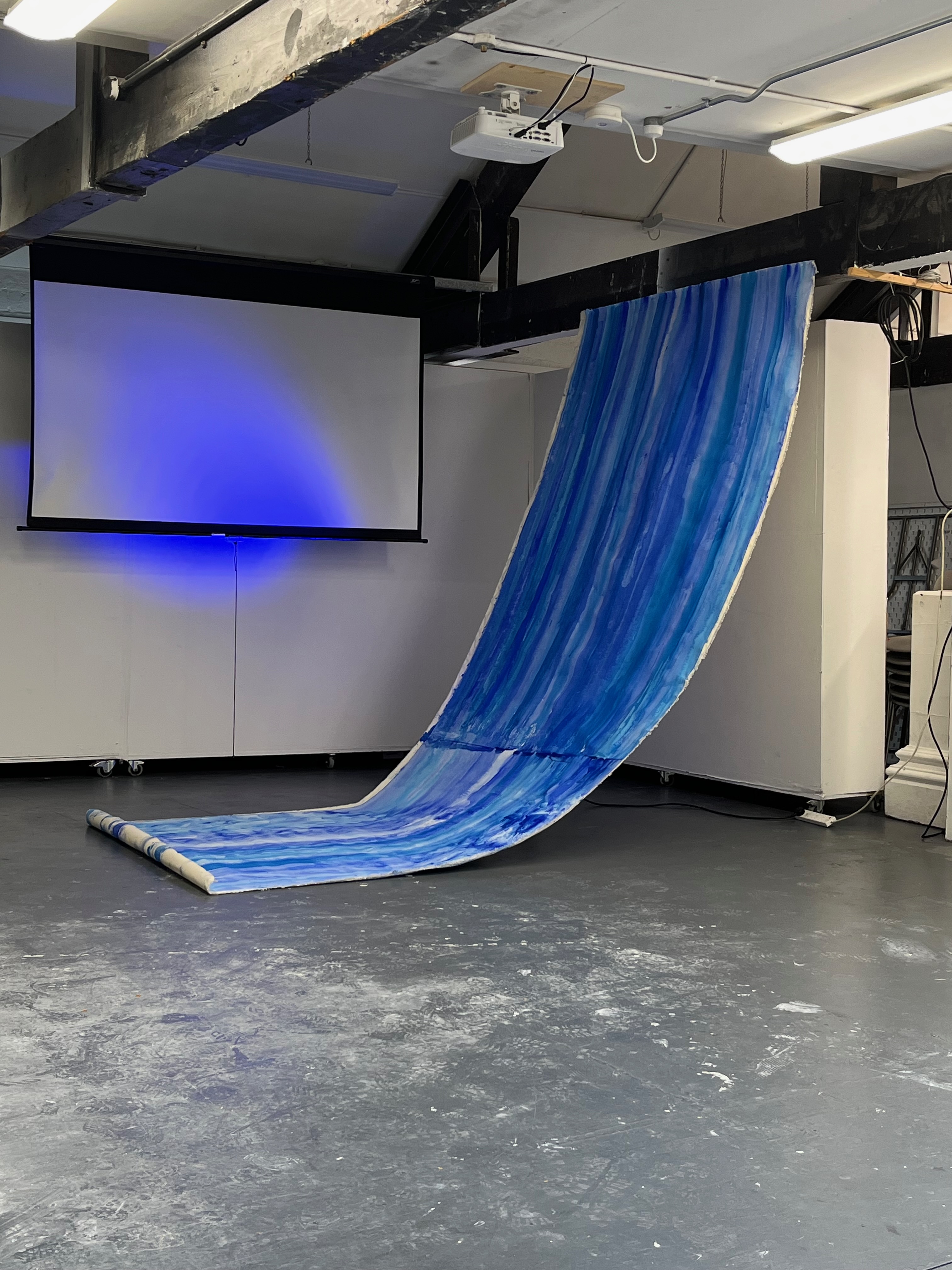
The works presented here attempt a modest but attentive response—positioning painting as both a reflective surface and an active record of the present moment. They aim to remain responsive to shifting technological conditions while acknowledging painting's ongoing negotiation with its histories, contexts, and future possibilities, and offering multiple and flexible options of installation and colour systems for future onsite projects and commission works within architectural and public settings.
Below: Detail from 'Shades of Green_Ireland 2.025'

What moves through the world gains meaning. Images, ideas, and artworks live through exchange, context, and connection. In an age of endless networks, visibility becomes value.
Shifting National Identity, Ireland 2.025
How has Ireland's identity been staged, represented, and reimagined through art? This project reflects on the ways artists have historically carried the symbolic weight of representing a nation on international platforms. At the 1956 Venice Biennale, figures such as Hilary Heron and Louis le Brocquy embodied a modern Irish cultural presence, where the arrangement, display, and selection of artworks became part of a wider performance of national identity and status. That tradition continues today, as biennales and global exhibitions remain spaces where artists and artworks are read as cultural ambassadors.
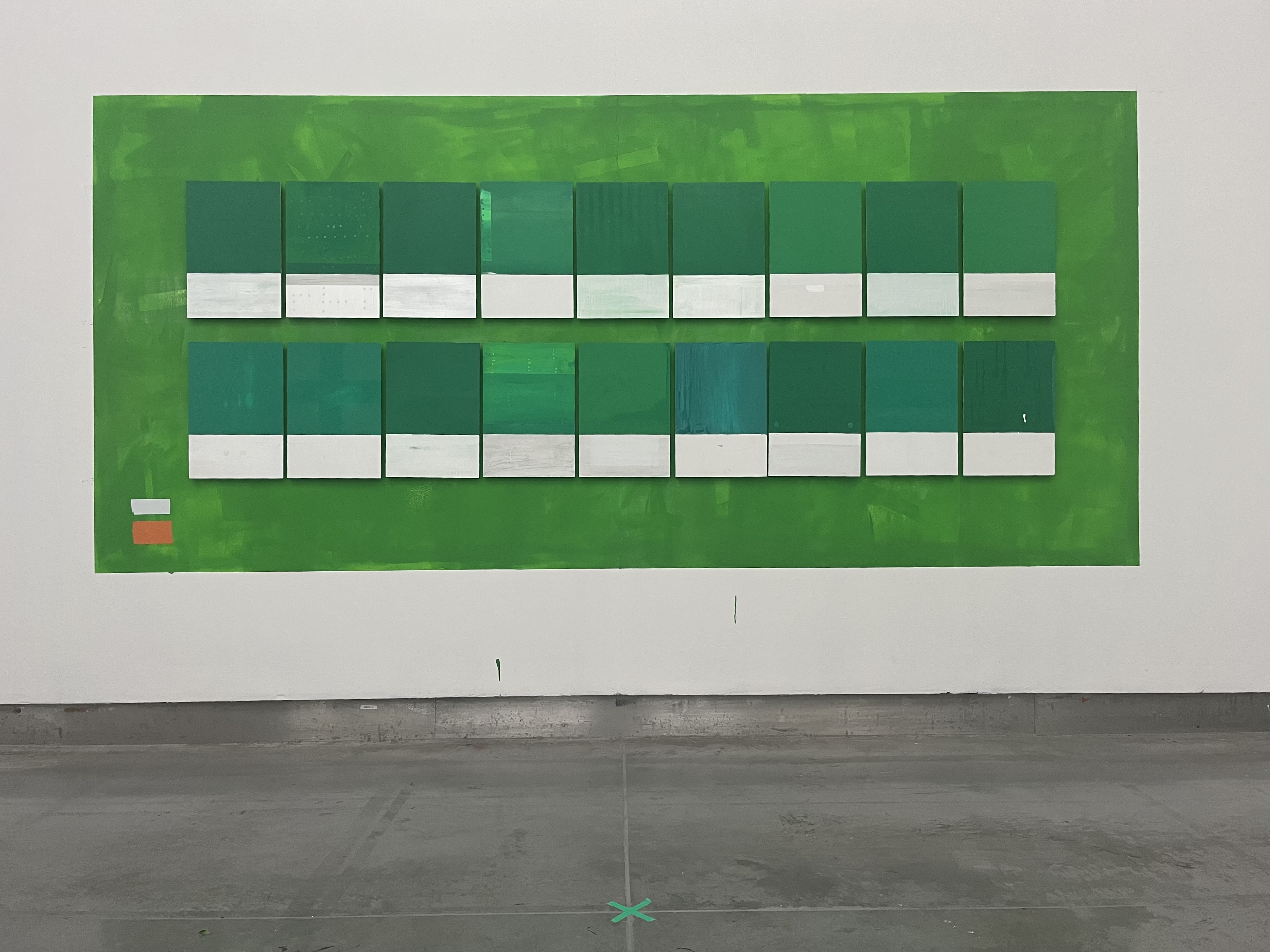
A visit in January 2025 to the Hilary Heron exhibition at the F.E. McWilliam Gallery & Studio, Northern Ireland, was a key catalyst—particularly the display of archival material relating to Irlanda, prompting new work that considers how national identity is constructed, exhibited, and continually reshaped, and the enduring role artists play within that process.
Today, power has become increasingly intangible—diffused into the invisible infrastructures of fibre-optic cables, cloud networks, and digital interfaces; migrating away from place-based institutions toward remote platforms and distributed systems. This shift from monumental physicality to distributed virtuality prompted a reflection on Ireland's evolving relationship with power, sovereignty, and national identity—a country whose cultural influence is now increasingly defined by its position within global techno-capitalism networks.
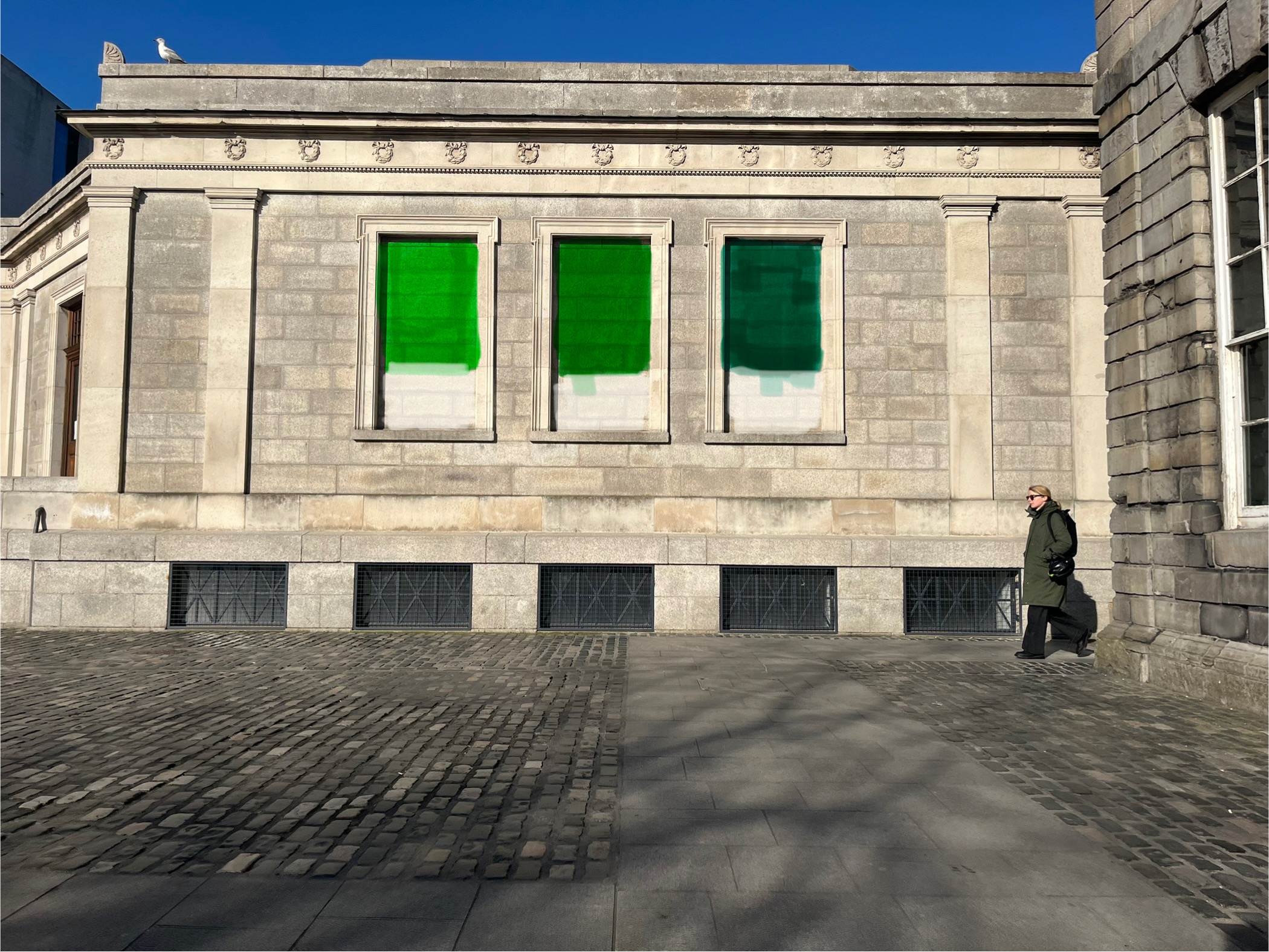
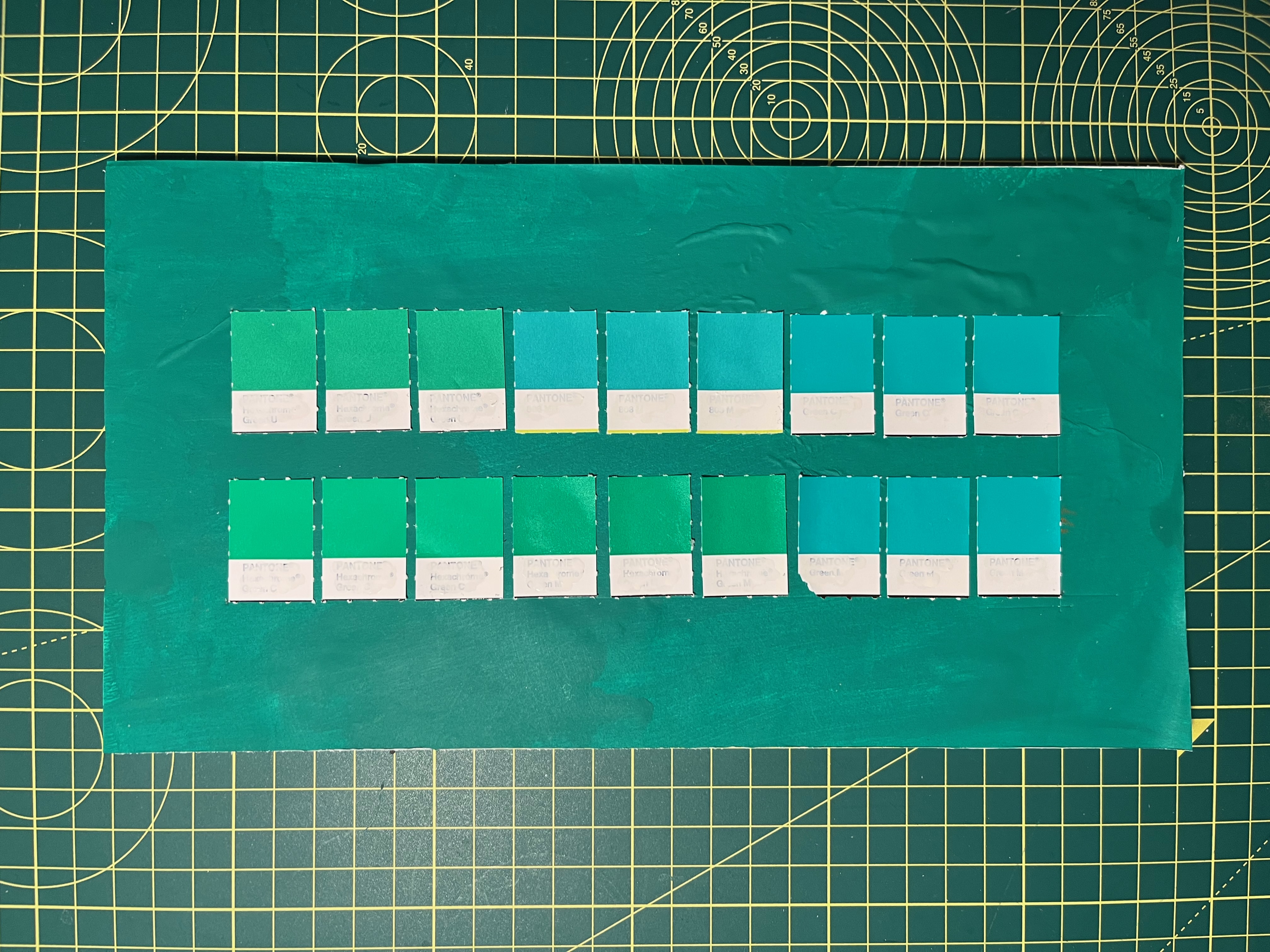
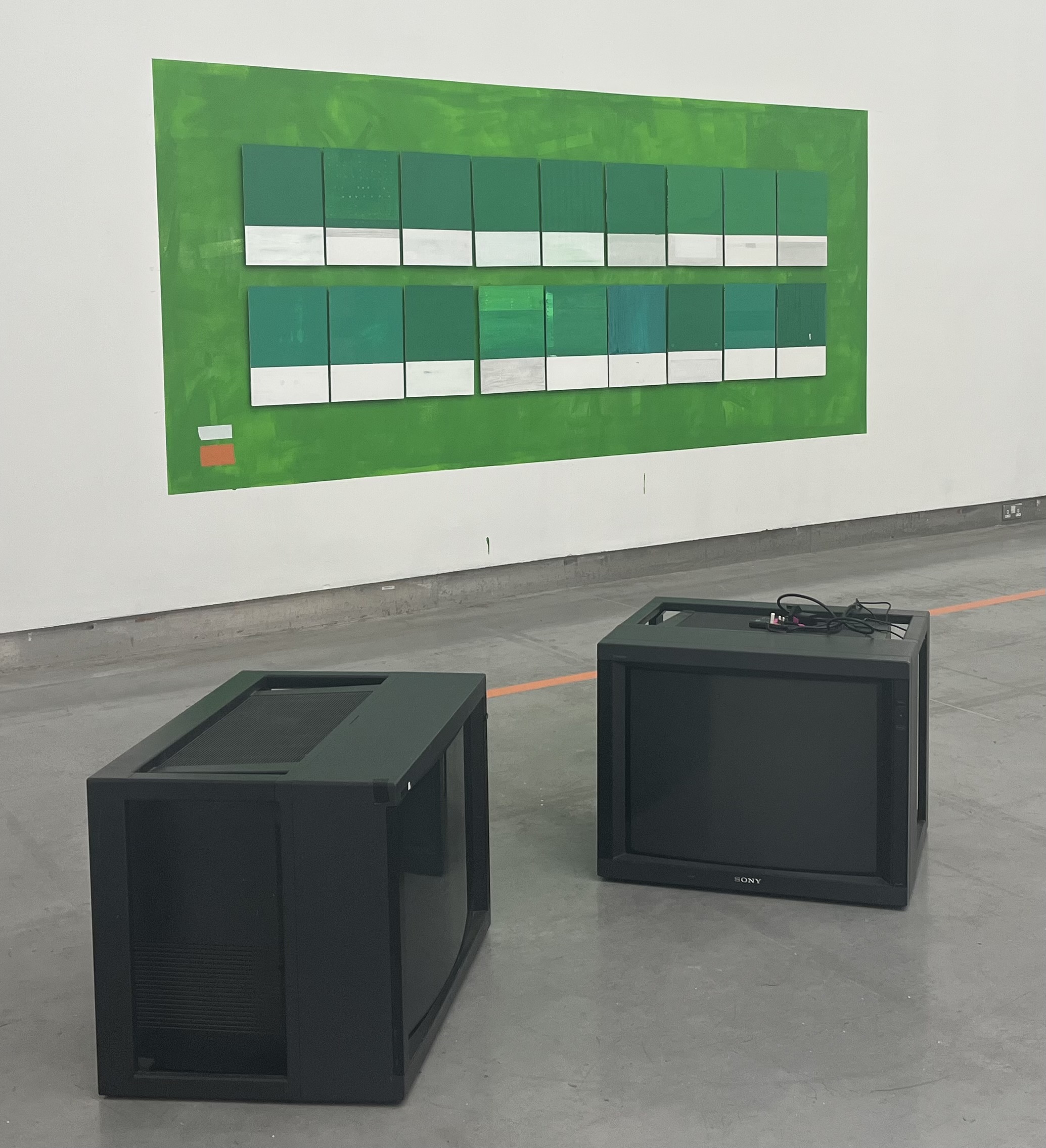
My paintings not only seek to address present-day urgencies but also engage directly with the condition of contemporary painting itself, particularly in response to the rapid proliferation of digital, image-based technologies. In After Modernist Painting, Craig Staff describes how we continue to work "in the wake not only of modernist painting and sculpture but of postmodernist deconstructions of these forms… in the wake not only of the prewar avant-gardes but of the postwar neo-avant-gardes as well.
These technically modular works aim for a subtle, yet critical, reflection on the role of painting today as a conduit for complex concepts that resonate with a contemporary global anguish and unease —manipulating the surface of the paintings and drawings to evoke the analogue storage of personal, social and cultural data and information.